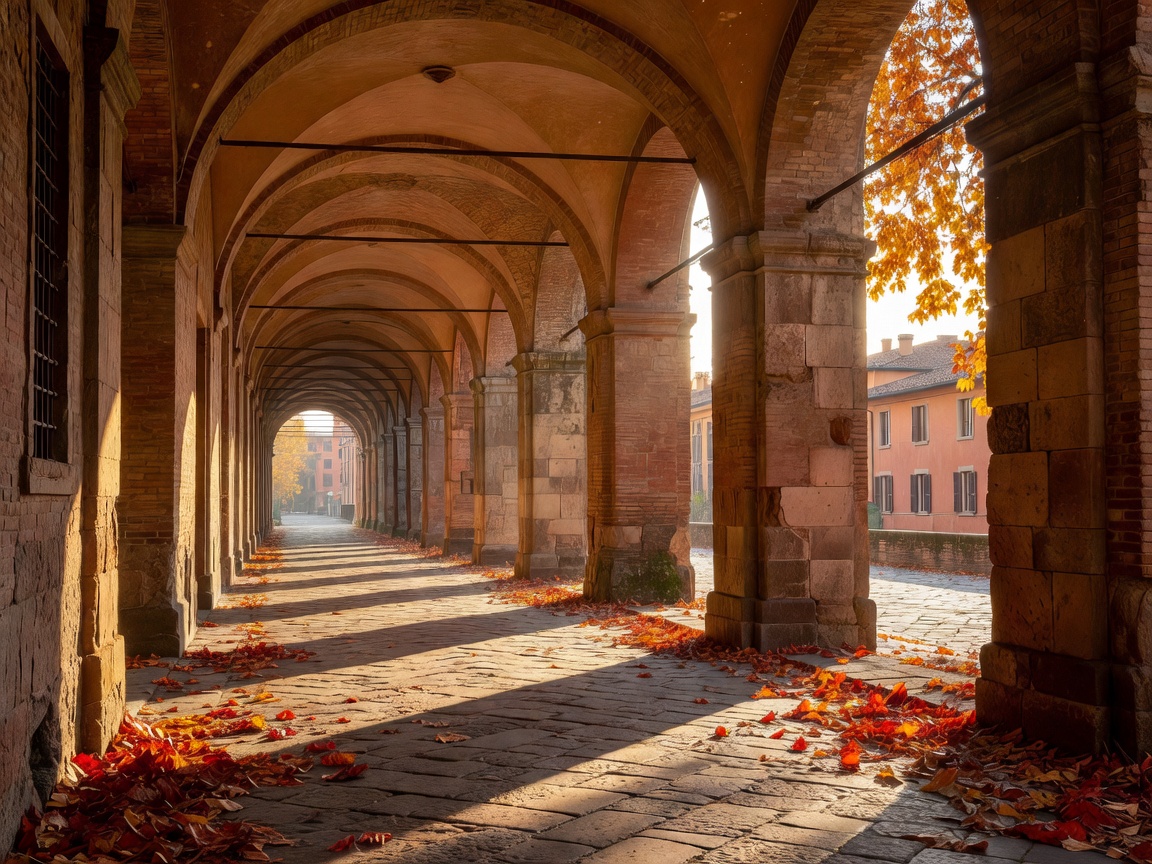
Autumn is a natural season for Bologna. September is warm, often 20–27°C, while October settles around 17–21°C and November around 11–15°C. Rain is possible, but the city’s porticoes make walking forgiving. The historic centre is compact, and the station makes Bologna a useful base for day trips to Modena, Parma or Ferrara.
Stay inside the porticoes
The Quadrilatero and Piazza Maggiore are close to markets, towers and restaurants. The University Quarter has livelier evenings and modest prices, while Santo Stefano feels elegant and residential. The station side is practical for an early train but less atmospheric. Choose air conditioning if visiting in September.
Eat your way through the centre
Begin at Mercato delle Erbe or the Quadrilatero, distinguishing a market visit from a meal. Tagliatelle al ragù, tortellini in brodo, mortadella and crescentine are local reference points. A pasta lunch around €12–18 is common, while a carefully chosen trattoria dinner may cost €30–50 with wine.
A practical weekend
Spend the first afternoon around Piazza Maggiore, the Basilica of San Petronio and the Neptune Fountain. Continue towards Santo Stefano and finish with aperitivo. On day two, walk under the porticoes towards the Sanctuary of the Madonna di San Luca, using a taxi or local bus one way if needed. Use a third morning for the university museums or a market breakfast.
The trade-offs
Bologna is less visually polished than Florence and less globally famous than Rome, but that is part of its appeal. Some restaurants close between services and the towers are not accessible to everyone. In return, you get a walkable city where food is integrated into daily life. Bring a rain shell, reserve one dinner and let the rest follow your appetite.